Meet Greg Fritz
The soapstone artist whose craft is dedicated to his roots – in life and with nature
By Megan Hollyoake
Photos by Megan Hollyoake and Ian McCausland Photography
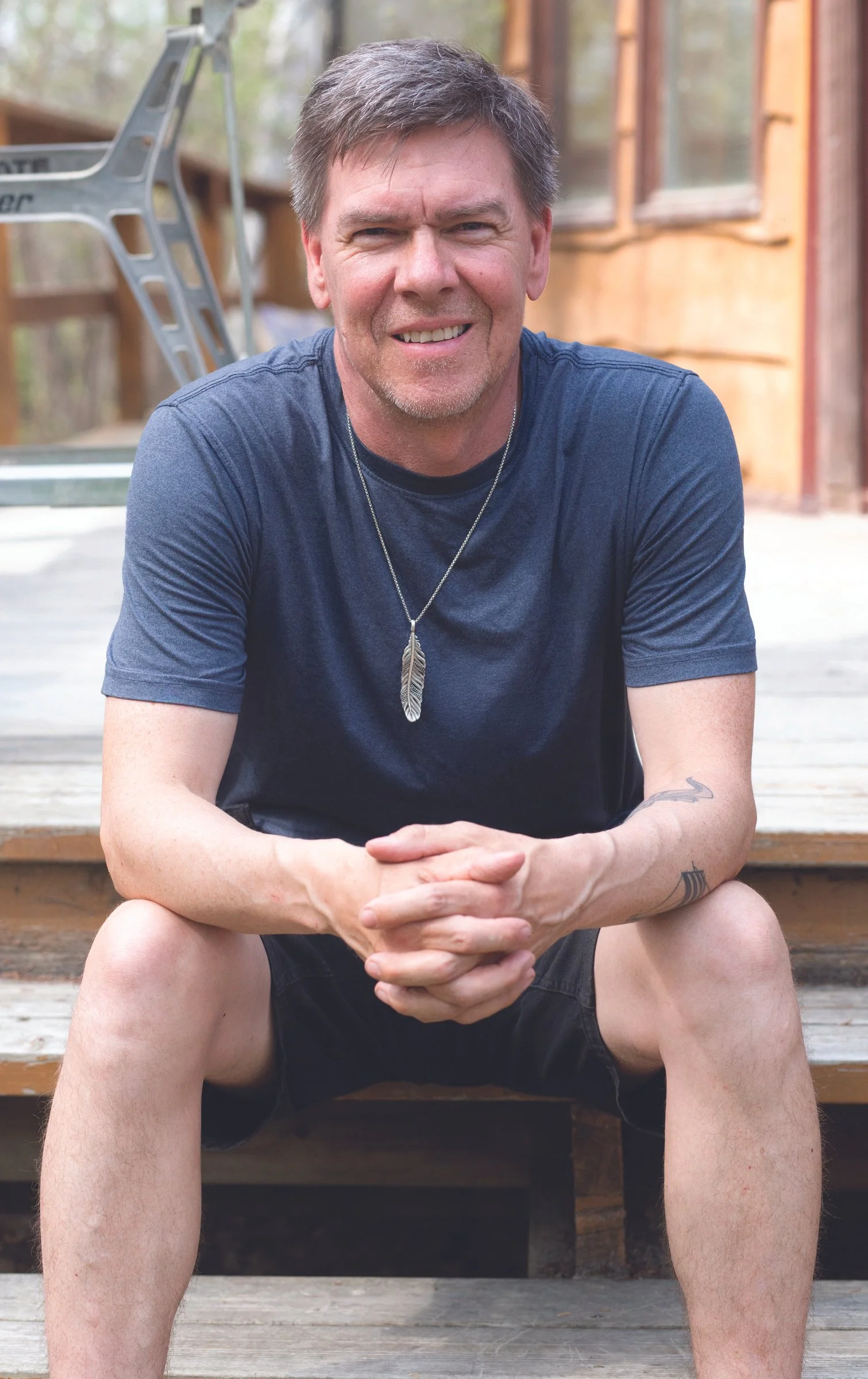
When you visit Greg’s outdoor oasis – a back corner lot enriched with forest for as far as the eye can see – you instantly feel calm. The layers of stress, caused by the daily grind, melt away and your senses are awakened to the beautiful melody of bird calls, smell of fresh air, and feel of the warm sun.
This is Greg’s happy place, and you are surrounded by the natural elements that he works with and celebrates every day.
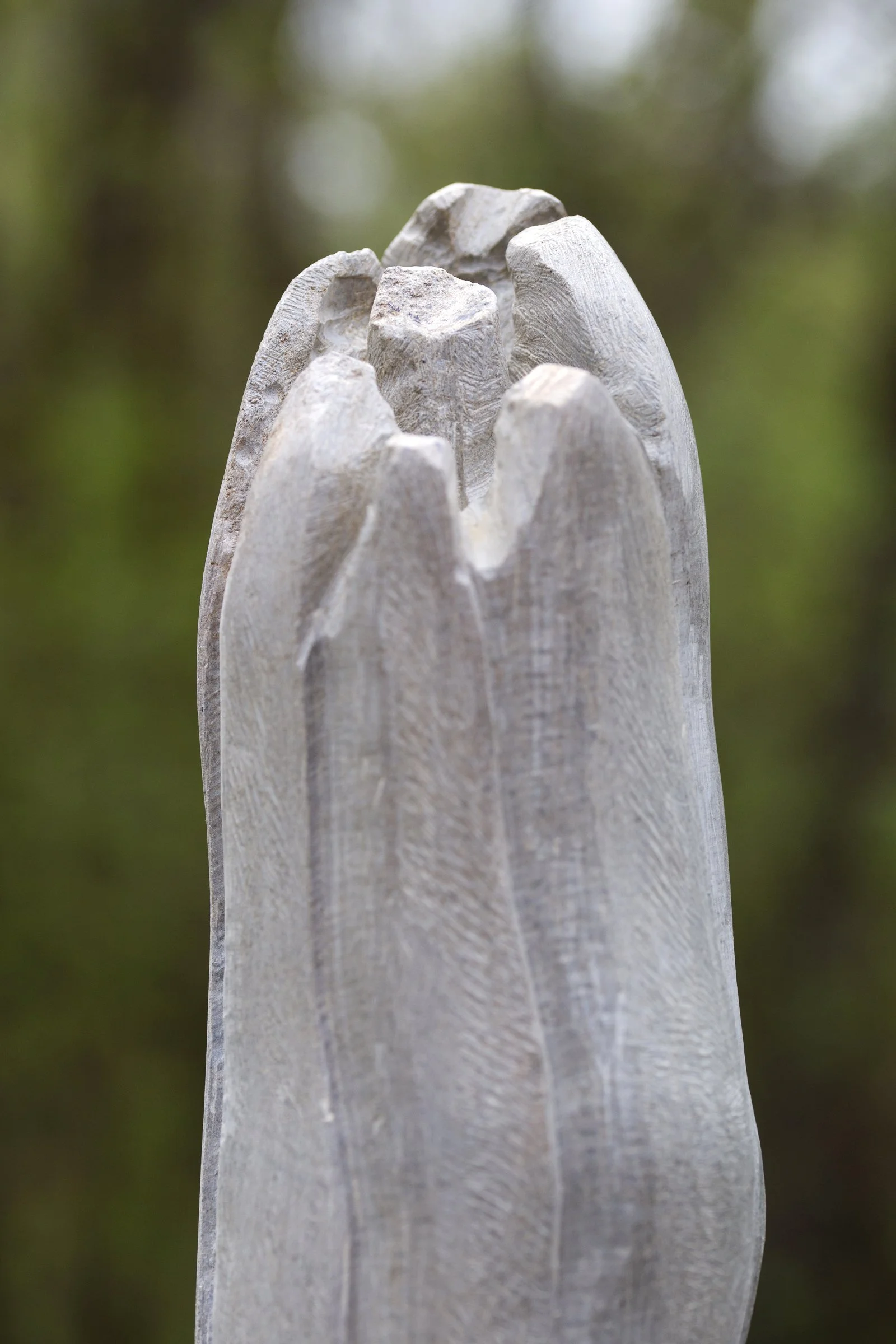
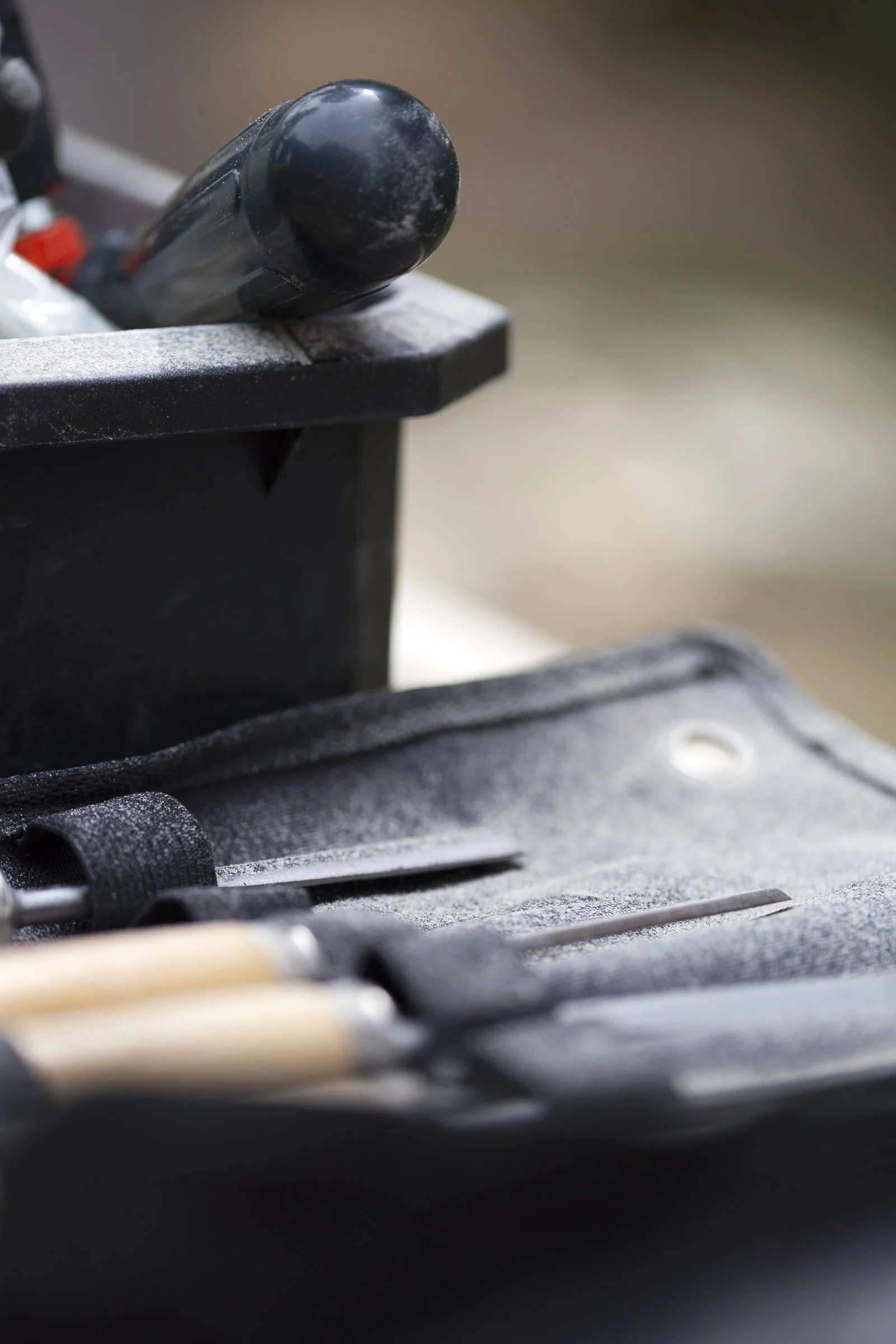
Sitting on the back deck of his Spruce Sands cabin on a Saturday afternoon, we catch up over a cold drink and talk about his latest piece nêhpêmîw (Set to Bloom). Greg is in the midst of carving nêhpêmîw, and his collection of tools are organized alongside the deck, gently covered with a light layer of dust after several hours of carving and playing with stone.
His piece stands tall and shines brightly in contrast with the backdrop of forest green; the lines of defining petals gently protrude off the base of the stone.
“The piece has a natural flowing shape to it, so I wanted to keep the shape and feel so nothing is symmetrical. I wanted to emphasize the leaves, and the one way to do that is make them big and bold,” says Greg. “There are seven leaves that are wrapped around the flower bulb, and the key is to get space in between them. I want the leaves to guard and celebrate the bulb and create a sense of anticipation for when you know it’s about to burst open.”
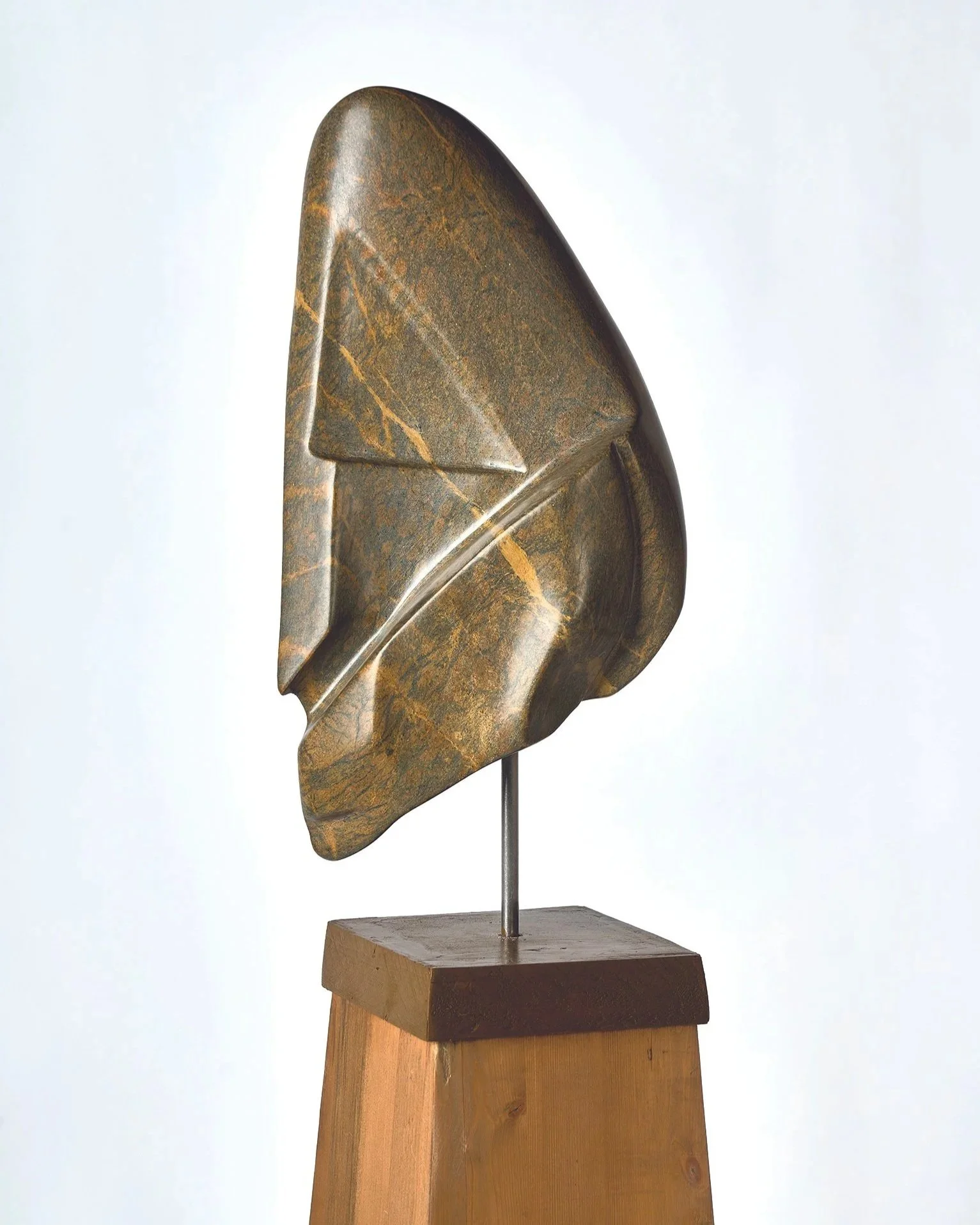
Greg’s speciality is taking a stone that’s an odd shape, naturally, and removing as little as possible: preserving the stone, honouring its shape, and – with time and observation – discovering what it’s meant to be.
His process takes place at the lake, where he’ll begin by observing the stone in different lights and various angles.
“I look at the stone as something that needs to come to life,” says Greg. “I’ll flip, turn and twist it in different lights, bring it by the campfire to see how the shadows dance off it, until I see what it deserves to be. Once I make that decision, I begin my carving immediately because I don’t want to lose the vision.”
Greg’s soapstone carvings are done by hand, and he takes his time to develop them. Each stone is unique and contains intrinsic characteristics that are unveiled as the piece comes to life. For instance, his current project nêhpêmîw has a natural vein that is engrained within the stone. When Greg discovered this, he shaped the stone to compliment the vein.
Greg describes the intimacy that comes with this type of medium, saying “It’s very therapeutic for me because while I’m carving, I’m thinking about my life, what’s going on, what I want to do differently. Other times, I’m carving with the wind, swaying in the trees, and listening to what the birds are singing/squirrels are chirping – so I feel like I’m at one with nature.”
Greg’s passion for the arts, and working with soapstone, began with dabbling with different forms of art. Growing up, Greg loved to draw and eventually took a couple of classes to learn other mediums, including oil painting, but wasn’t inspired to go further. Then fate intervened when Greg received a couple pieces of soapstone and pack of chisels for his birthday. He decided to take a class to learn more about the craft – and from that moment on, has dedicated his time to carve two to three stones a year.
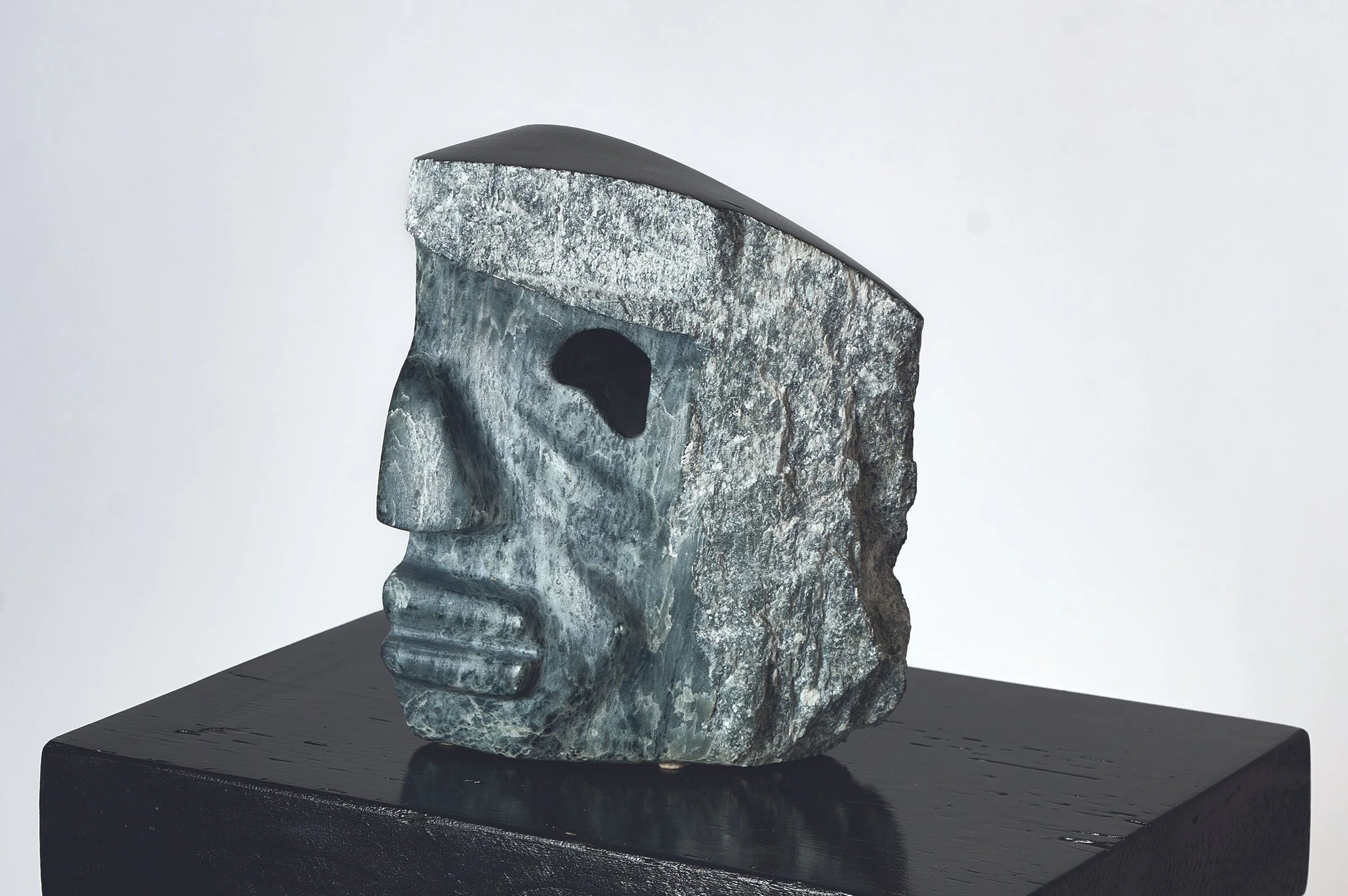
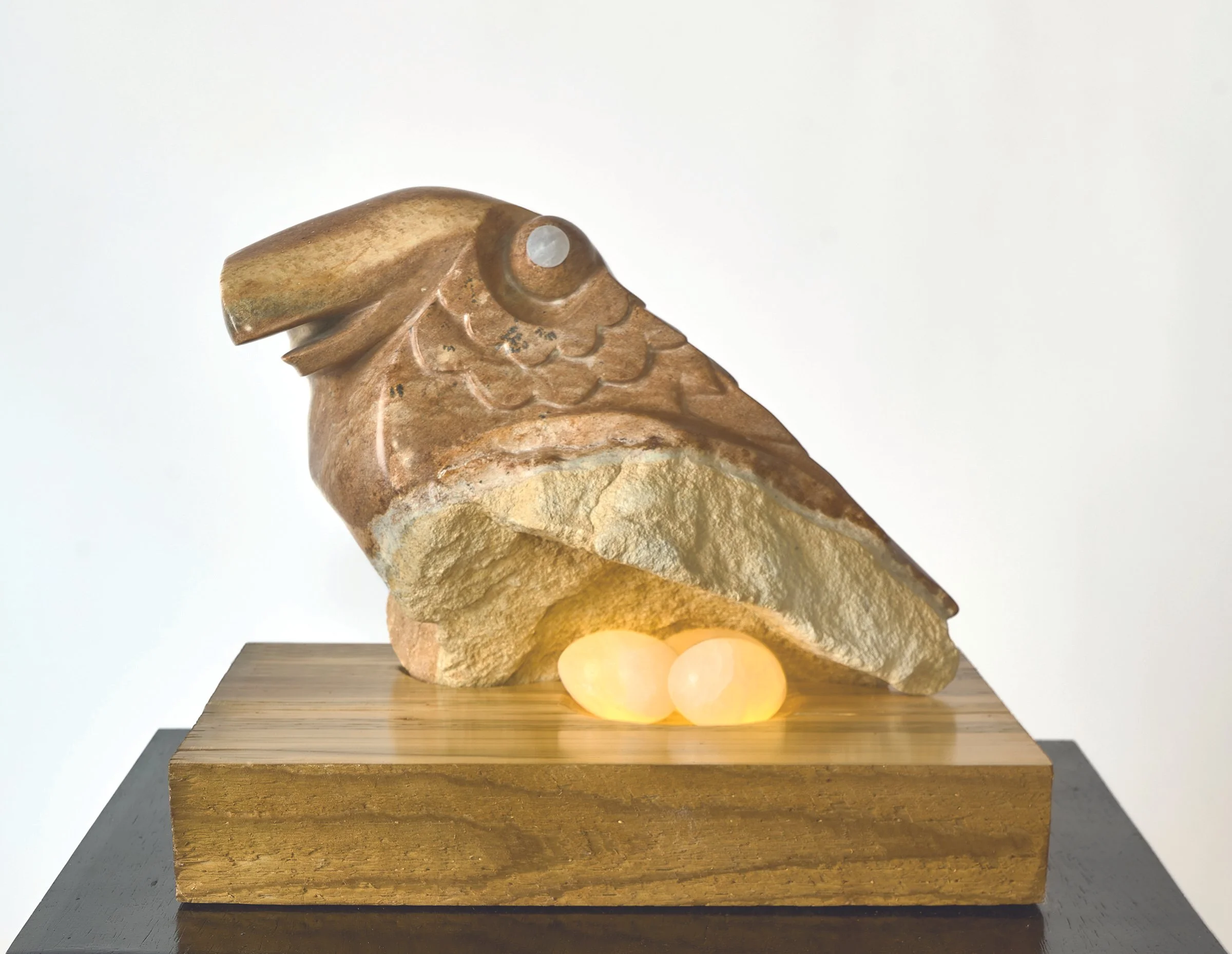
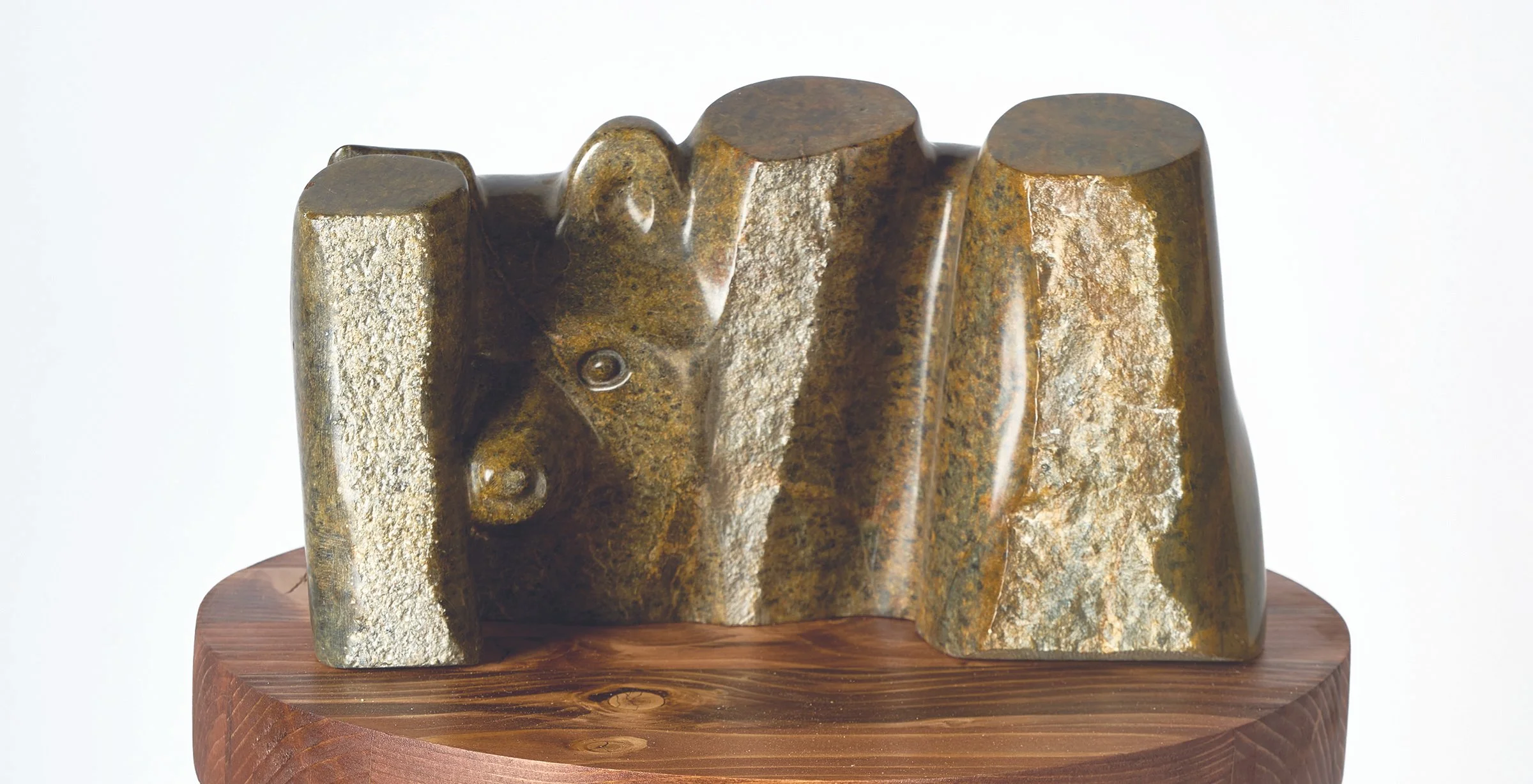
25 years later, Greg has seen and experienced so much – personally and within his craft. He always knew he was adopted, but he wasn’t aware of his Indigenous roots until he connected with his birth mother and her family.
“When I turned 30, I decided to go to the adoption agency to write my birth mother a letter. I wanted to thank her for bringing me into this world and share that I have a beautiful life and am grateful for my adopted parents. The agency was very excited because a week earlier, my birth mother filed to do the same thing,” says Greg. “About 10 years later, I got an email from the agency informing me that I have a sister that would like to contact me. Onowa and I started talking, and she connected me with my birth mother Janice.”
Greg’s newfound connection to his birth mother’s family revealed his Cree heritage. Greg has fully embraced his roots and takes great pride in naming his sculptures in Cree first, English second, as a symbolic way to honour his culture.
“Ironically, I was sculpting Inuit, Indigenous-style structures for years prior to discovering I was Indigenous.”
With every carving, Greg is dedicated to honouring his roots – in life and with nature – by bringing out what’s hiding in the stone. “For me, nature is so beautiful and the stone deserves to show as much as it can. The more I immerse myself into nature, the more I am connected to the stone. Each piece is like writing a song or piece of poetry – they convey my emotions and reflect what I’m experiencing at the time.”