Walk On
For children at Prairie Strides, progress can start with a horse and lead somewhere unexpected.
by Aileen Goos
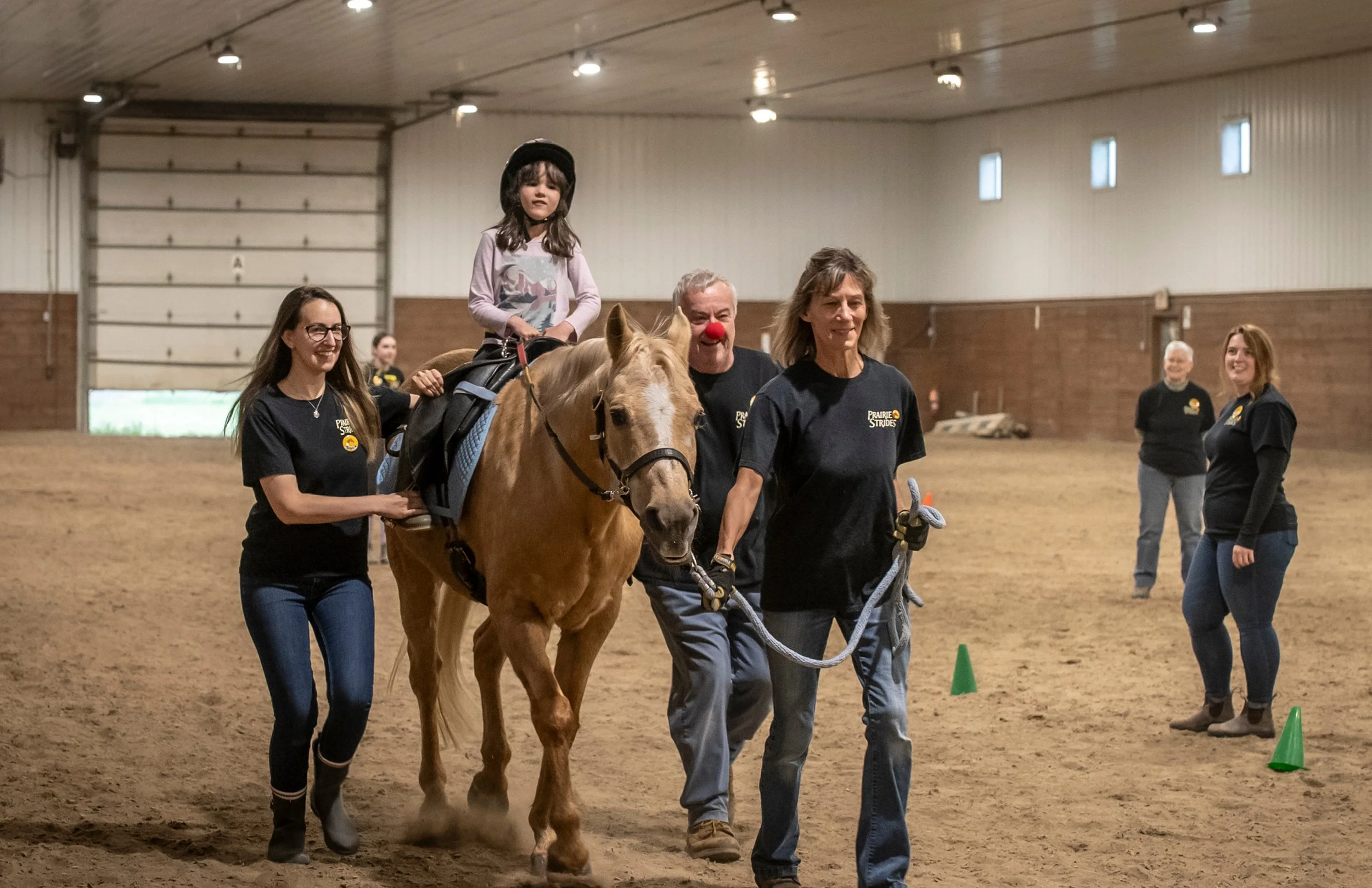
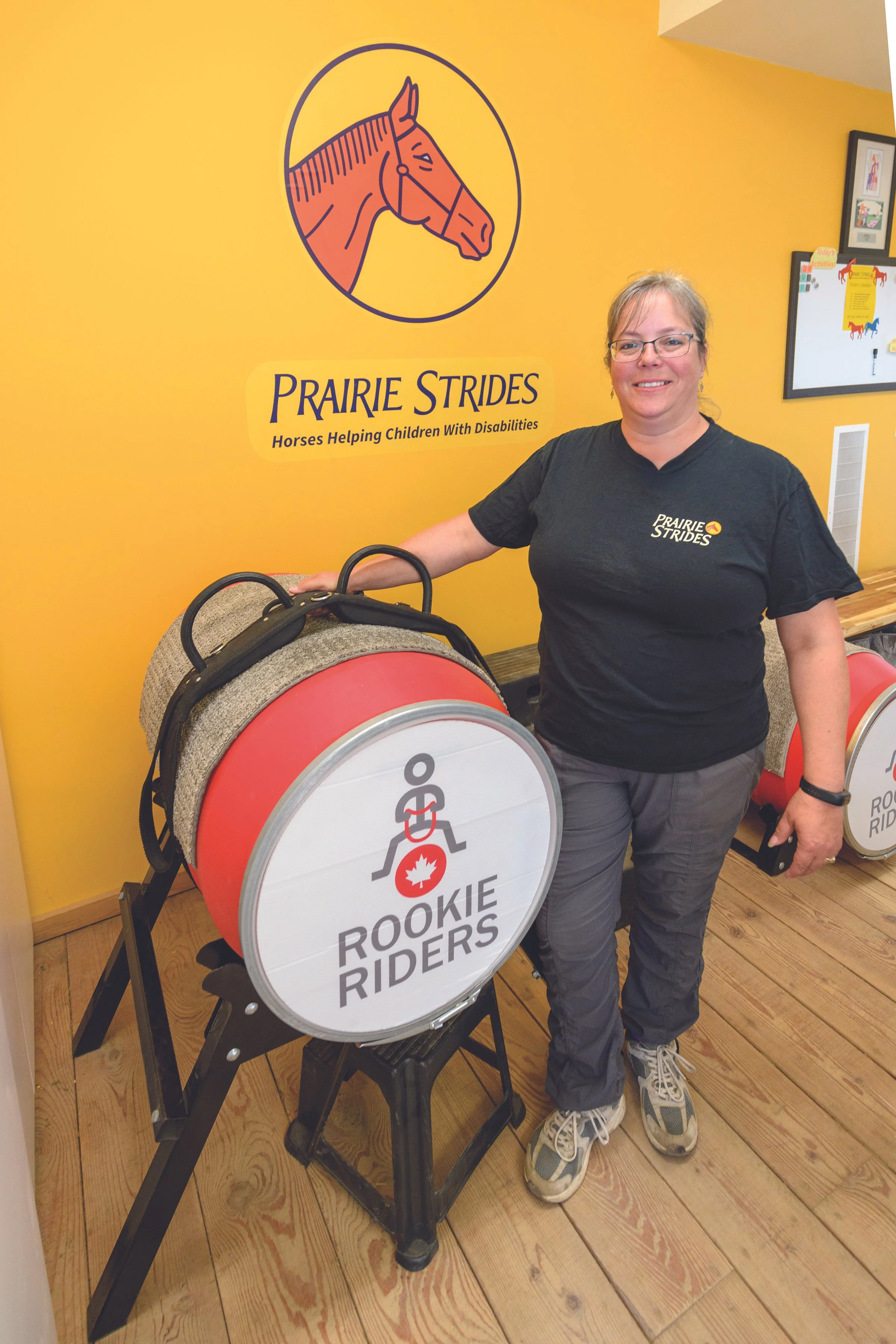
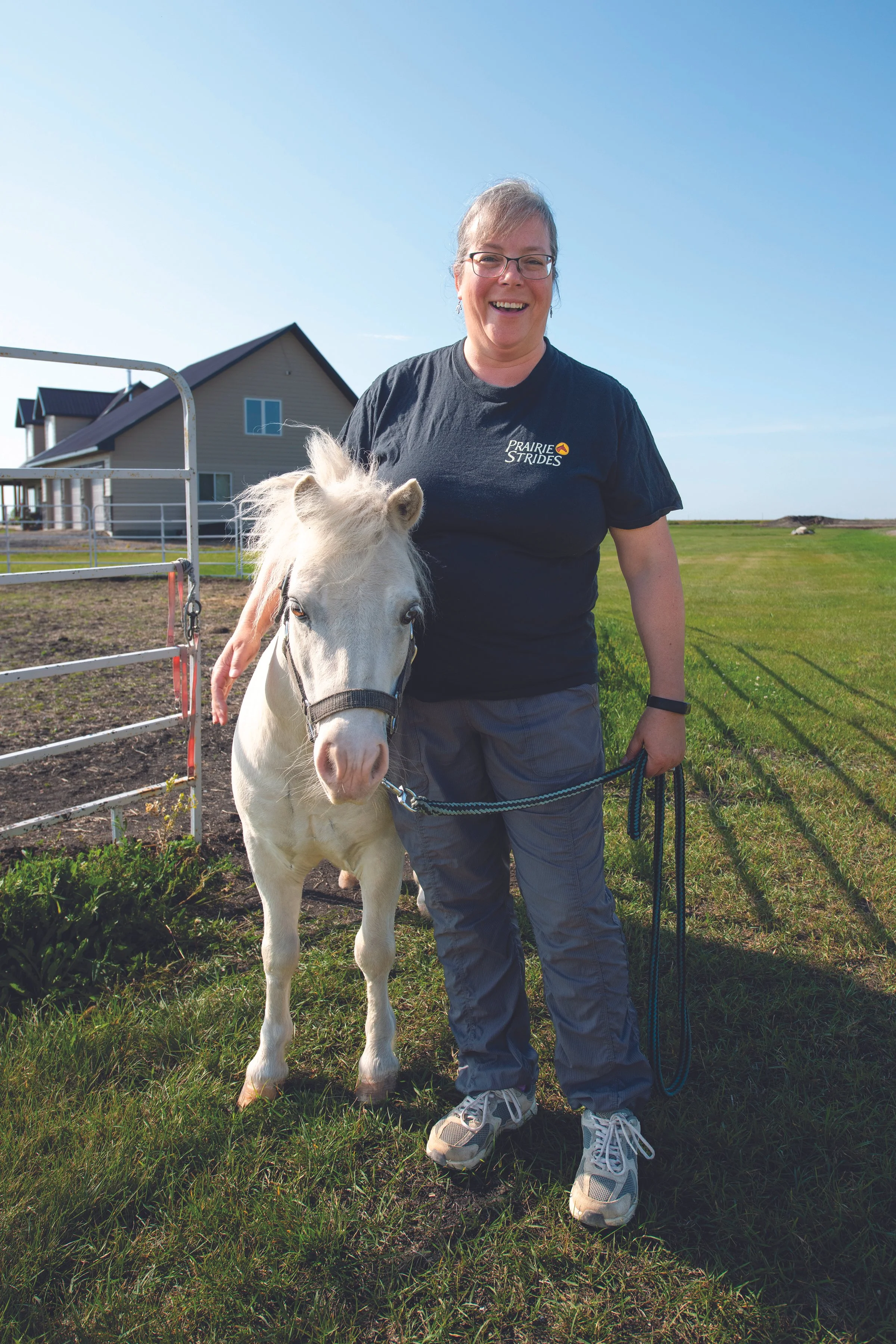
Christina Dolinski has learned to look differently at progress.
As executive director of Prairie Strides Inc., she’s seen change begin with something as small as a child reaching out to groom a horse, a quiet rider communicating with a favourite animal or a teenager catching and saddling her own horse.
“If you can get into something you love, then you’ve got to stick with it. Everybody has to find what they love,” Dolinski says.
At the Oak Bluff barn where Prairie Strides operates, much of that connection begins with the horses.
About 12 horses take part each night in the adaptive riding program. Instructors adjust activities to meet each rider’s needs, while volunteers provide the support required to make each session possible.
The program welcomes children with a range of physical, developmental and intellectual disabilities. For some, riding offers an opportunity to take part in a sport that might otherwise be difficult to access.
For one young rider, it started with simply being near the horses.
When he first came to the program, he stood at the mounting block, turned his back to the horse and stayed on the ground.
Dolinski and the Prairie Strides team invited him to spend time at the barn without expecting him to ride. During that first session, he explored the barn and Dolinski knew that being there was enough for him.
“We let them decide when they’re ready,” she says. “They have to be willing to do it.”
The approach led to a ground-based program designed to help children become comfortable with the barn and horses. They might groom for a few minutes, search for toy dinosaurs or run cars along a horse’s back.
Gradually, the boy began interacting with the horses. Months later, after his mother sent Dolinski a video of him riding at a petting zoo, he returned for another assessment and got on a Prairie Strides horse.
Everyone in the arena cried.
He has since completed two riding sessions. He doesn’t speak much, but Dolinski has heard him quietly tell his horse, “Walk on.” His mother says he watches horse videos at home and seems to miss riding when the program is on break.
His experience is just one example.
Another rider arrived shy and reluctant to look at or speak with people. Over time, she developed a bond with a favourite horse and began helping groom and prepare it before riding.
Now 17, she rides independently, catches and saddles her own horse and volunteers as a sidewalker.
“She had an outlet, something she loved to do,” Dolinski says.
Other riders have similarly gained confidence and physical ability, with some eventually riding independently. Those who are able and want to build on those skills can move on to other riding programs or facilities, where they may learn to jump.
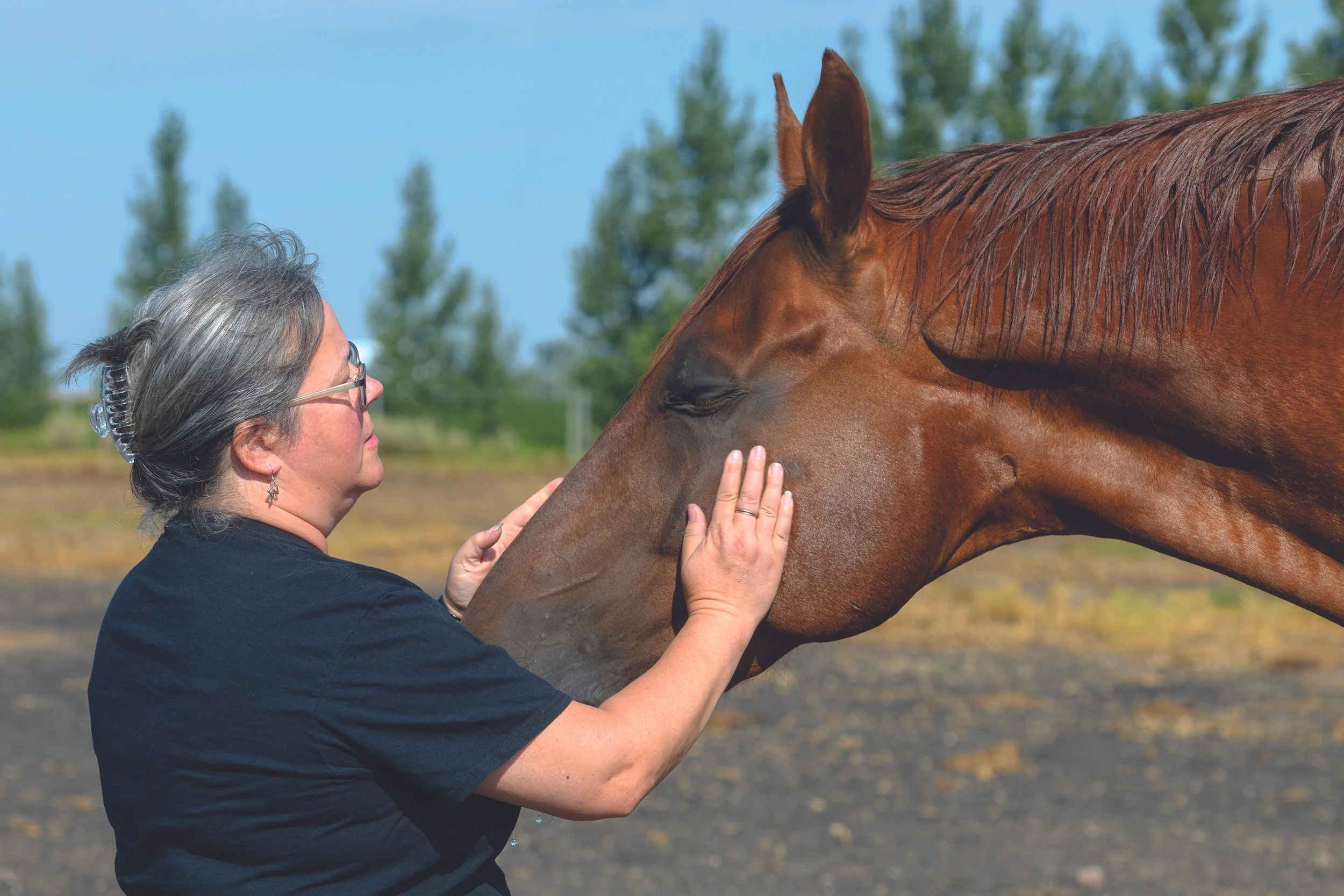
Prairie Strides offers adaptive riding rather than clinical therapy. Instructors adjust activities to make riding accessible and comfortable for each participant. A therapist volunteers as an adviser, but many benefits develop through movement, responsibility and the relationship between rider and horse.
For children who use wheelchairs or other mobility devices, the horse’s gait can move their hips and body in a rhythm similar to walking. Dolinski remembers a friend who rode after a serious car accident.
“I feel like I’m walking again,” he told her.
The horses themselves are an important part of what makes those moments possible.
Dolinski’s herd includes former racehorses, privately owned horses and horses born in her care.
Temperament matters more than background when choosing a horse. The horses are exposed to unfamiliar sights, sounds, toys and equipment so they can learn to handle unexpected situations. Sometimes, Dolinski says, they seem to understand exactly what a rider needs.
She’s watched a 17-hand horse lower his head into the lap of a child in a wheelchair, standing quietly to be petted.
Stories like these have helped keep Prairie Strides going through financial uncertainty, a pandemic and the loss of many longtime volunteers.
Formerly known as Manitoba Riding for the Disabled, the organization changed its name to Prairie Strides in 2022. It will mark its 50th anniversary in 2027.
Dolinski has been involved with the organization, in various roles, over the years and has served as executive director for the past three. The facility where Prairie Strides operates was designed with the program’s needs in mind.
The organization receives no government funding. Rider fees cover only a portion of its expenses, with Prairie Strides subsidizing about 75 per cent. Donations, grants, sponsorships and fundraisers make up the difference.
“We want to find ways to be able to help some of those families be able to participate and not worry about the cost of it, but have the benefits for their child,” she says.
Prairie Strides is working towards sustainable funding that would help it plan further ahead. Even a smaller monthly donation can make a difference – especially when many people contribute.
“I’d like to be working three years out if I can,” Dolinski says. “Having that money there so that I know we have three years, and we can keep building from it. That would be my number one goal.”
The organization is also developing winter programming using barrels to teach fundamentals such as balance and body movement, allowing children to stay connected to riding when cold temperatures make regular sessions difficult.
For Dolinski, the goal is to keep providing children with an opportunity that might otherwise be out of reach.
“We could do our best to accommodate those that may not otherwise be able to do it,” she says. “And the fact that we can do that is heartwarming and very gratifying.”
Dolinski hopes more people will come see the program for themselves.